Welcome to The Museum of the Slain
The largest collection of Mortality Artefacts in the known. This museum holds relics and records of all things now gone forever, and aims to further the remembrance and understanding of that which is otherwise lost to us.
A pretend museum
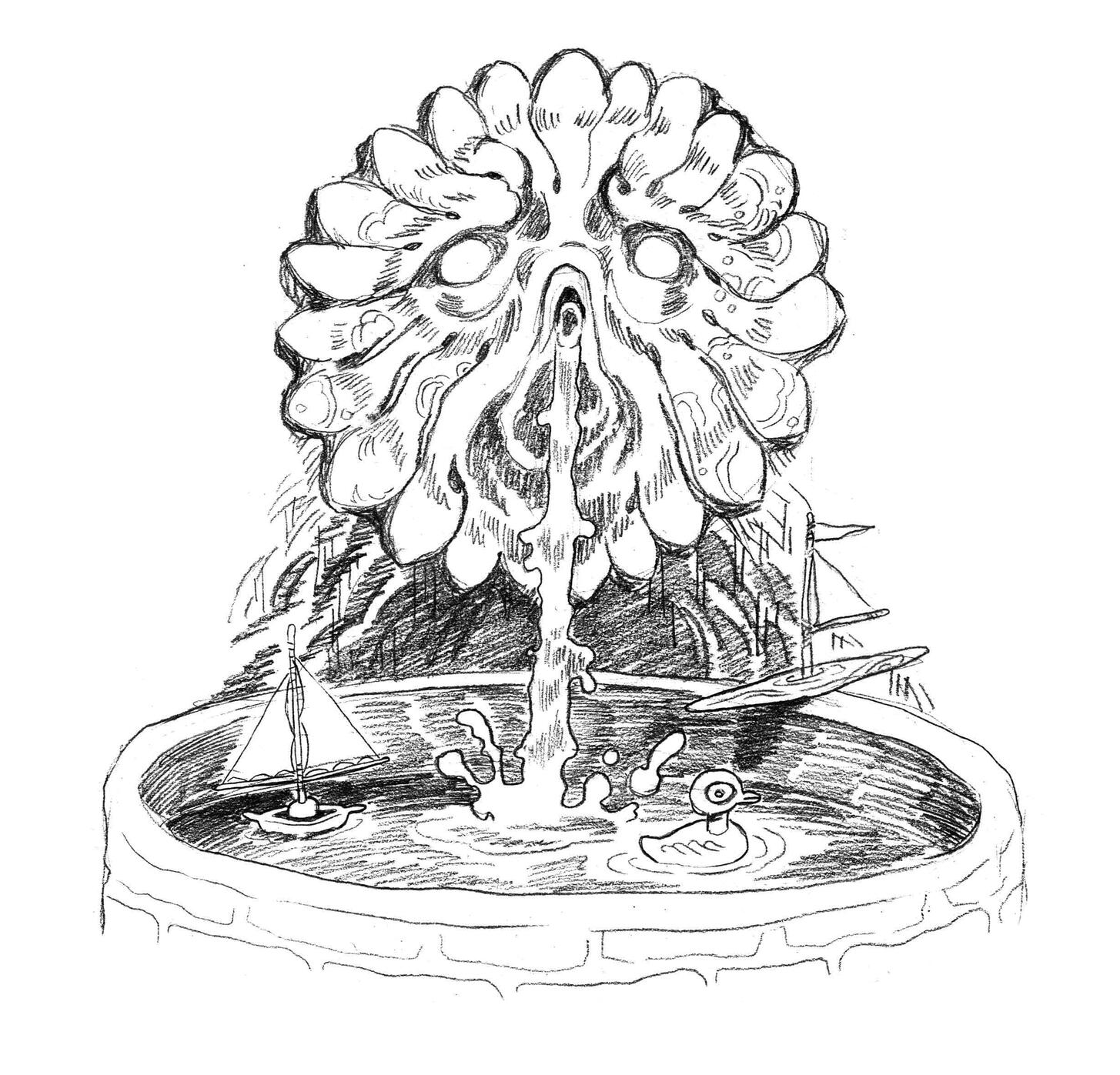
The Museum of the Slain is a creative project by Letty Wilson.It is a fictional Museum of all things dead, lost, and forgotten. A record of a world that keeps ending, and an exploration of the human need to categorise, collect and to render the impossible parsable.
How to find us:
The Museum is large. What has been mapped is far reaching. If you have found this website then you will be provided with an entryway at the earliest convenience. Please do not attempt to avoid entry when provided, as this can lead to path branching.If you have found the Museum without foreknowledge then please see visitor information to be catalogued and welcomed.
Opening Hours:
Mon - 10.00-17.00Wed - 10.00-19.00Thurs - 10.00-17.00Mon - 10.00-12.00Weekend - 11.00-00.00Mon again - 00.00-00.00Holidays and Cursed days - please enquire
Accessibility Information:
All visitor areas are fitted with hearing aid Loops. sign language and various other interpereters are available, as well as printed guides in large print, braille, and simplified language.[Mirror script guides are not available at this time.]The museum is usually wheelchair accessible throughout major visitor acess areas. however, please check at reception on arrival for changes to the current Museum structure which may affect accessibility. Visitors with limited mobility or who are unable to walk long distances are advised to avoid the Labyrinthine Wing.Please note that there are areas of the Museum where human and animal remains are on display, as well as areas that discuss and depict death in many forms, including violent and traumatic ones. Advisory signs are displayed at the entrance to each exhibit, and visitors are asked to treat the Museum and its exhibits, as well as other visitors, with respect and thoughtfulness.There is a Reflection room which visitors can use if they require a quiet, low-stimulus environment, situated near to the gift shop.
Discover
Guided Tour
Our virtual tour takes you on a guided trip through the main areas of The Museum, from the comfort of your home computer! Help plan your visit, or get a sense of a trip to The Museum that's almost as good as the real thing!
Treasures of the Museum Audio Tour
Get a closer look at ten of the treasures of The Museum, with this audio exhibition put together by staff members at The Museum. Each object is described in detail by an expert with unique insight into its history, properties, and the amazing secrets it has to offer.
Grave Guardians
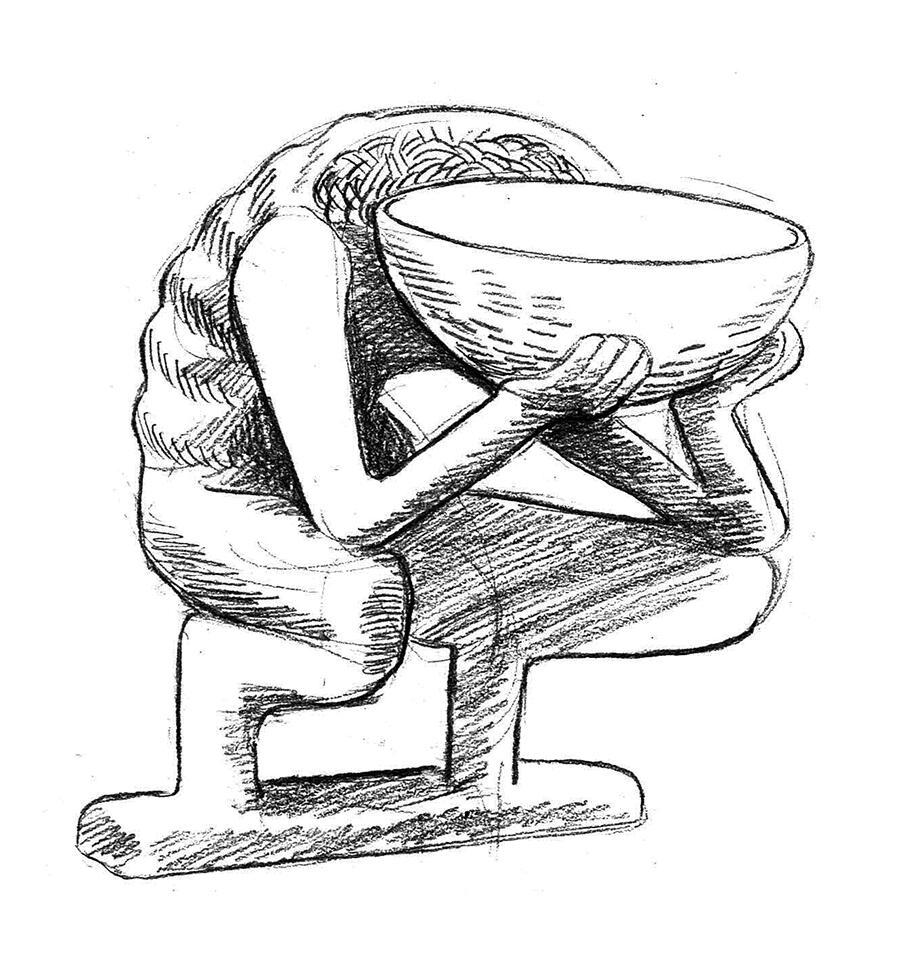
We apologise but this exhibit is closed until further notice.Who guards the dead? Hear the tales of objects made to watch over graves, tombs, burial mounds and funerary urns, in this landmark exhibition of Grave Guardians, containing hundreds of figures and related items from over fifty cultures!
Archive Tours
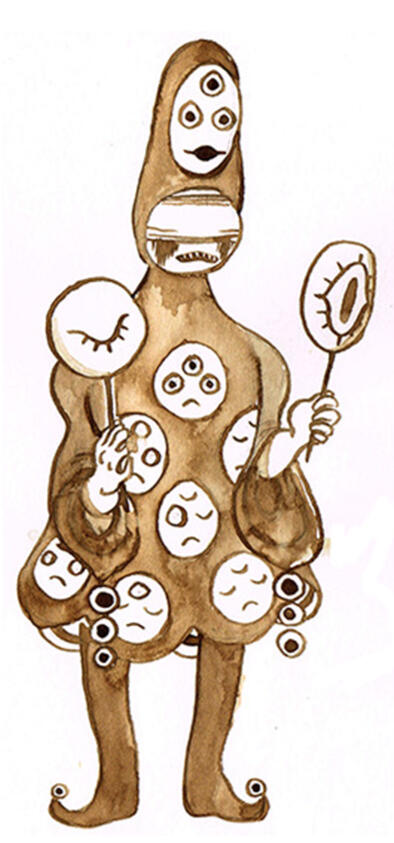
Archive tours are not currently running.Ever wanted to see what it's like to be a researcher in The Museum of the Slain? Gain a unique glimpse at the archives and library of the museum, and see behind the scenes to find out how the Museum works! Includes exclusive viewings of special artefacts you won't see on display in the main museum!
Dendromancy
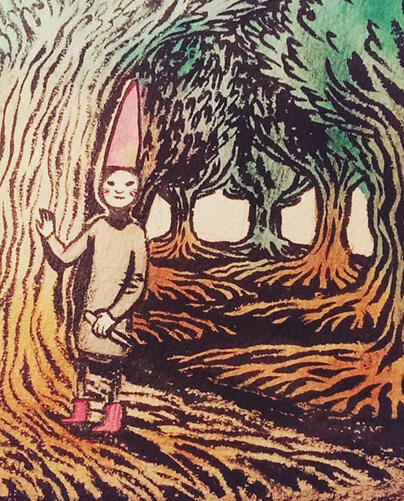
Coming soon! A fascinating look at the art of dendromancy - or divination using trees.
Ways to Support us:
Become a Patron
You can help the Museum of the Slain with a regular or one-off donation. You money will go towards funding the monomniacal obsessions of our researchers, and increasing the amount of weird art in the world. You'll also gain access to texts not on display anywhere else in the museum, as well as behind-the-scenes looks at how the Museum works.
Contribute
Want to lend your expertise to The Museum of the Slain? Found some artefacts you think should be within our walls? Seeking refuge from the end of the world? We'd be happy to have your contributions, and there are many ways to help! Click below for more information.
Shop
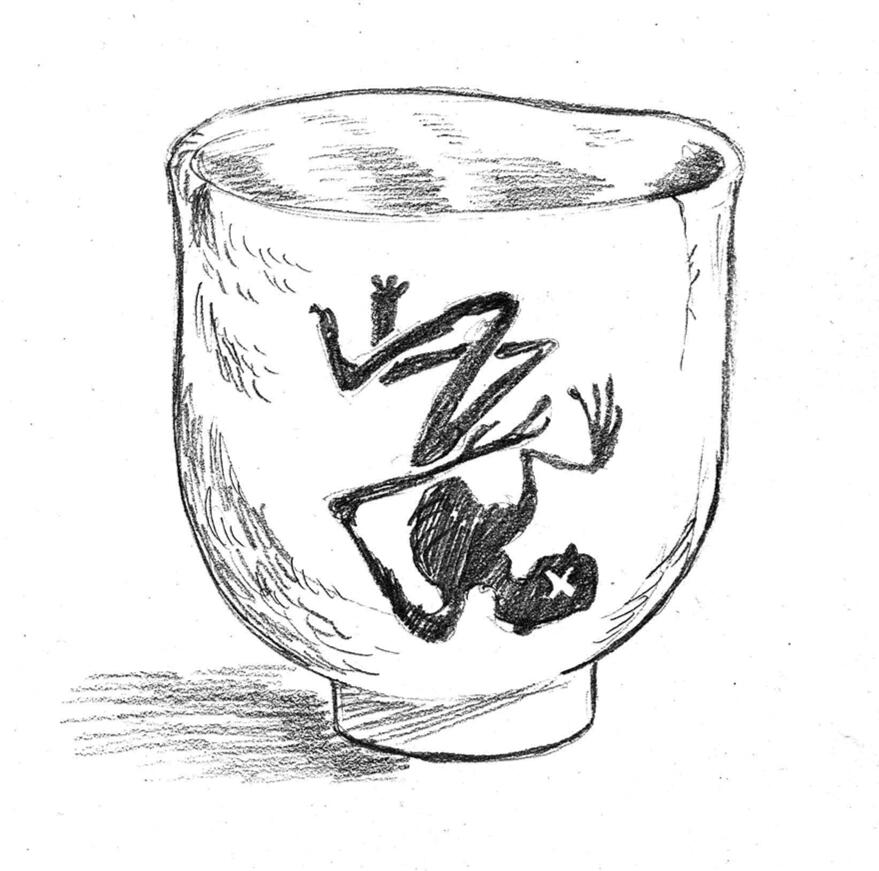
Museum Bookshop
Currently available titles in our bookshop.
(Please note: not all titles will be available in the physical shop, but all are available in digital form, usually at around half the price of a physical copy)
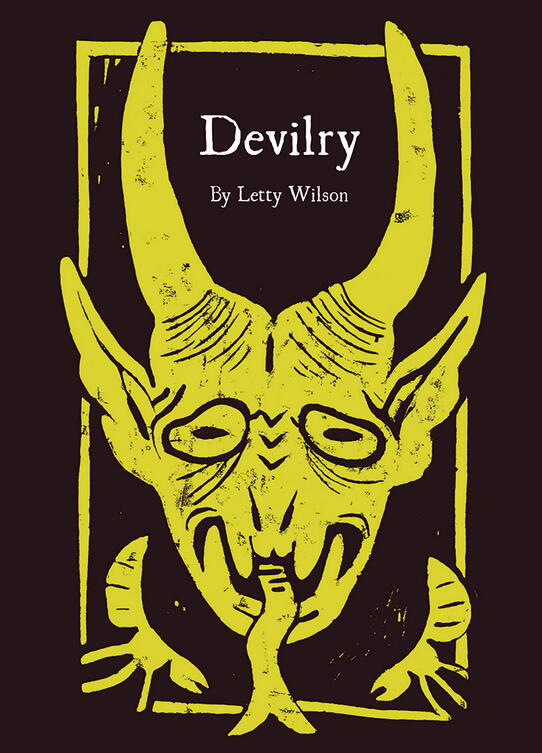
Devilry
A collection of diabolical tales, told in ink drawings and traditional block print illustrations.
68pp colour throughout.
Nudity, religious themes, body horror.
2021.
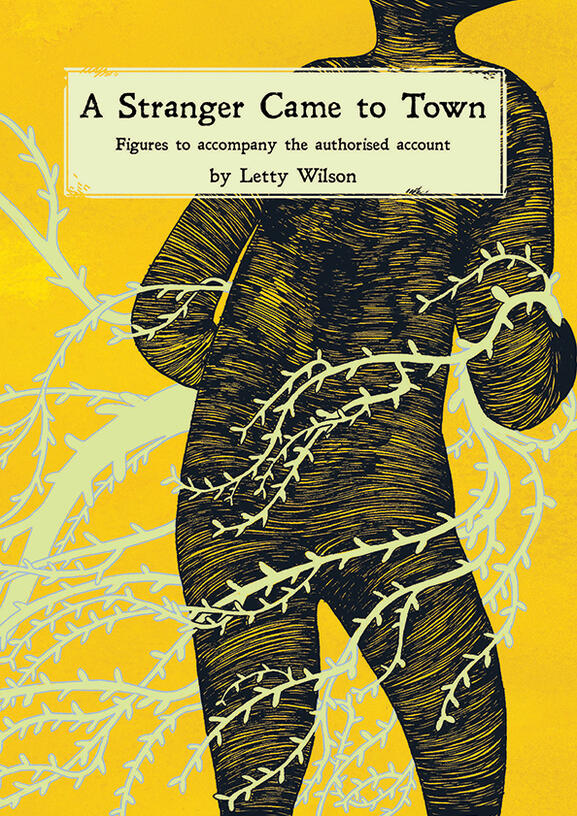
A Stranger Came to Town: Figures to Accompany the Authorised Account
A stranger comes to town, and leaves things different. Seven strangers. A week of change. a story told in figures to accompany the authorised account.
44 pp colour throughout.
Insects, body horror.
2017.
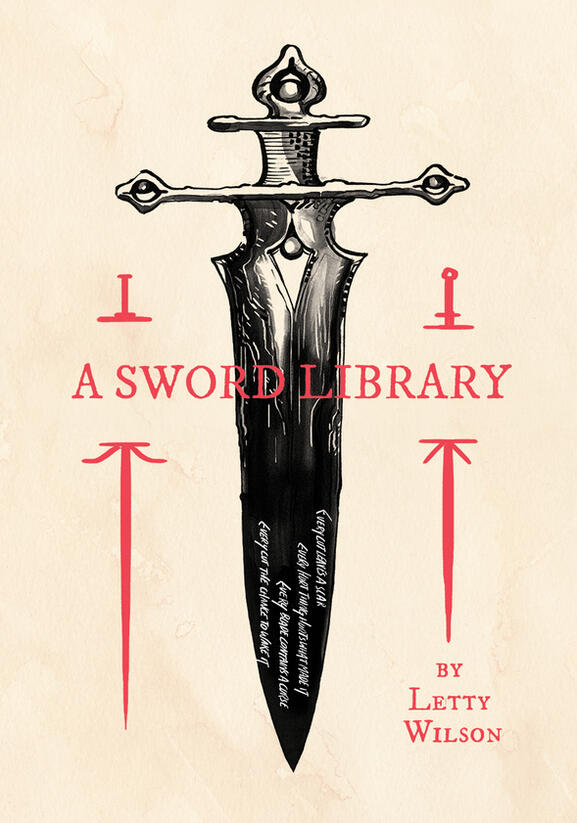
A Sword Library
A collection of thirty cursed swords, with instructions for use. Browse the collection of the Sword Librarian: an arsenal of blades, each afflicted with some cruel or unfortunate idiosyncracy.
76pp, colour covers, bw interior.
Violence, blood, insects, body horror.
2022.
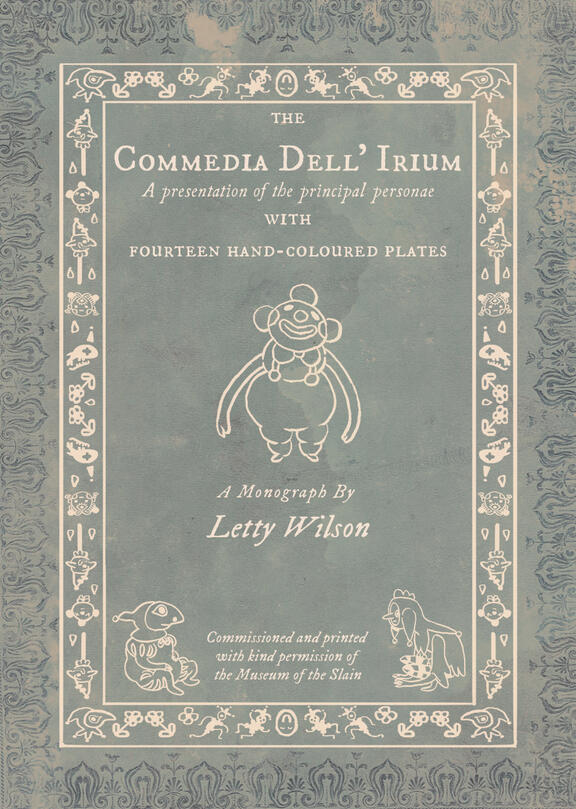
The Commedia Dell'Irium
A book of the principle personae of the fictional theatrical form, the Commedia Dell' Irium. Each clown is illustrated with a description of their role within the Commedia.
40pp, colour throughout.
Body horror, violence, burning.
2023.
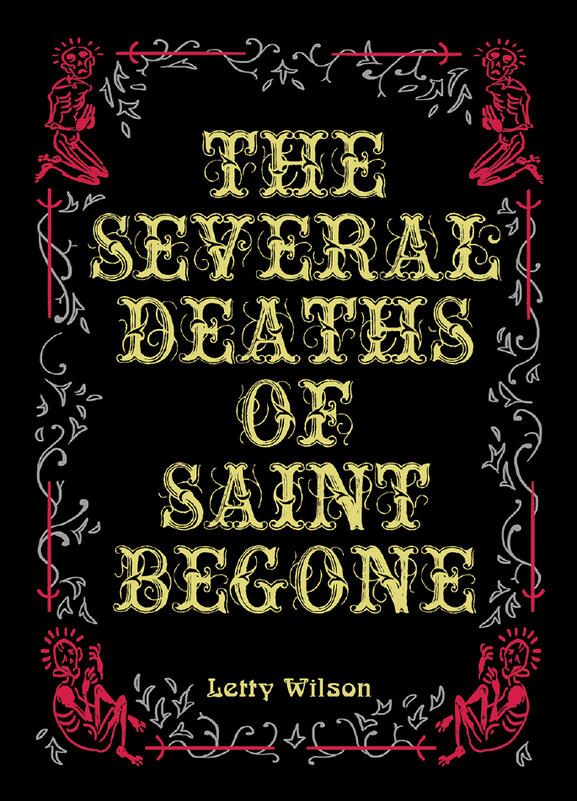
The Several Deaths of Saint Begone
Short illustrated story about a Saint who got what was coming to him.
32pp, limited colour throughout.
Violence, impalement.
2023.
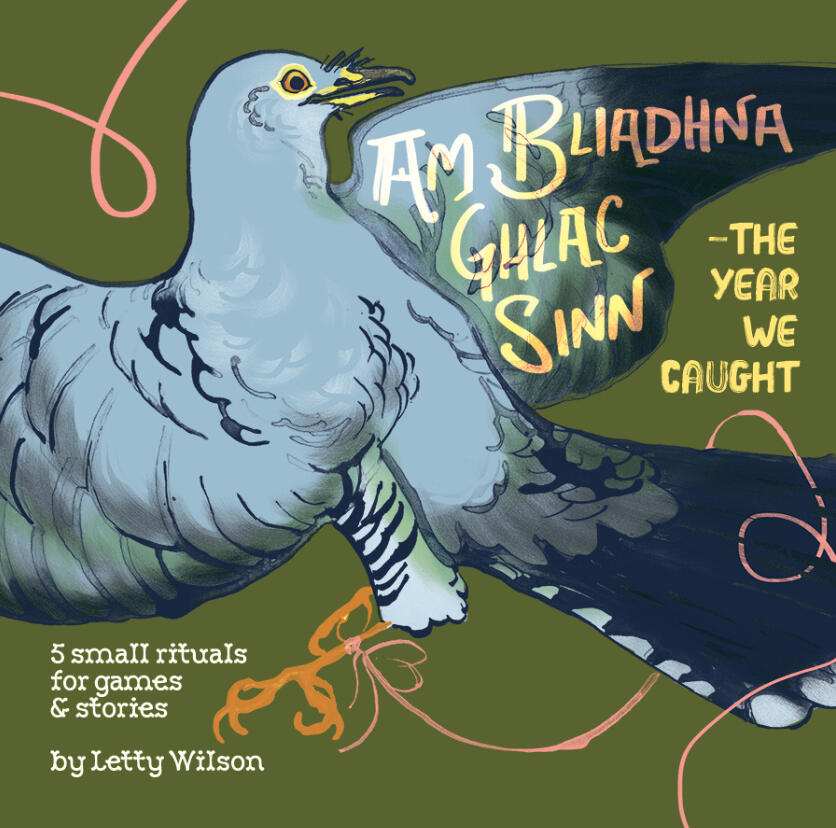
Am bliadhna Ghlac Sinn - The Year We Caught
Five rituals inspired by pre-christian folklore and traditions of the British Isles.
60pp colour throughout.
Body horror, violence, end of the world, live burial, human sacrifice, animal death.
2024.
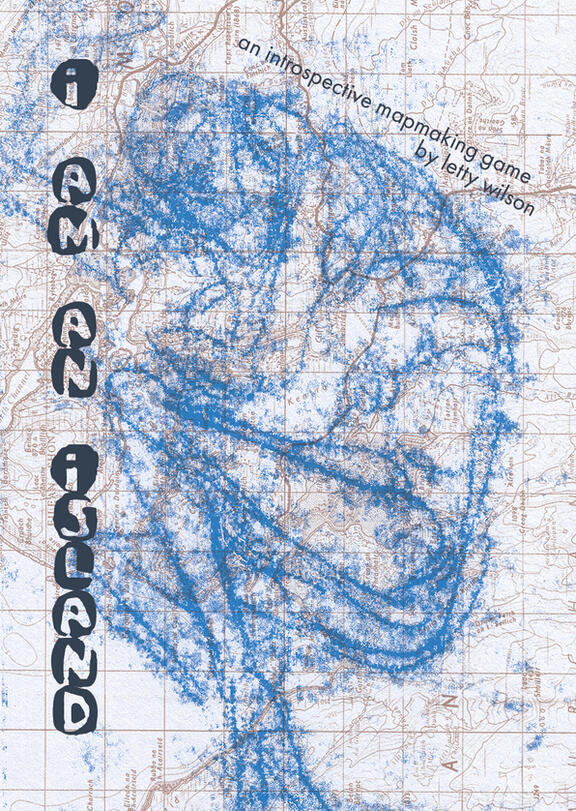
I Am An Island
I am an Island is a solo mapmaking game where you use your own body to inspire a map of an island. It doesn't take long to play or require any equipment except something with which to draw, write or otherwise depict your map.
24pp 2-colour risograph.
Nudity, close discussion of embodied sensations.
2025.
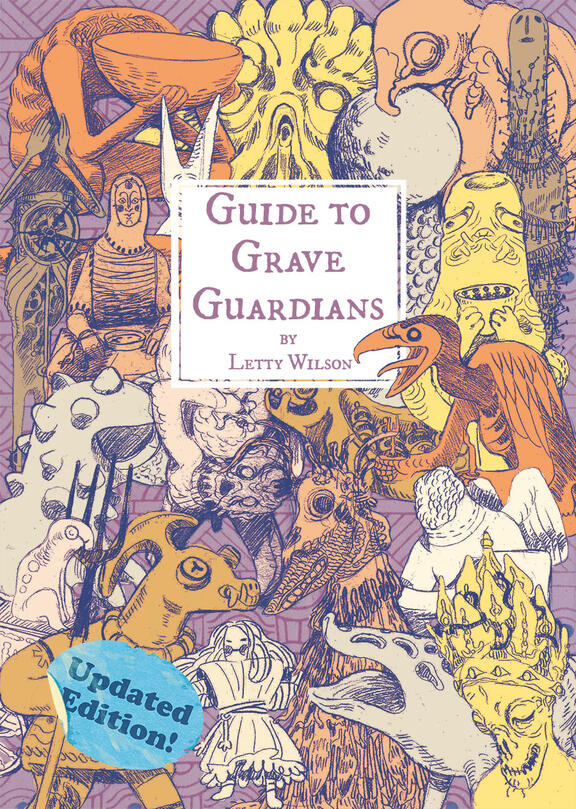
Guide to Grave Guardians
A companion to the landmark Museum Of The Slain exhibition, this guide details the many forms and functions of grave guardians.
40pp colour covers, bw interior.
Death, discussion of violence, cannibalism, colonial violence.
2025.
Curious Cadavers Club!
Interactive games, puzzles and learning for little explorers!
Museum Treasure Hunt
coming soon!
print out this free treasure hunt to discover the secrets of the Museum!
Dedmund Dearth's Deadly Dares!
coming soon!
printable puzzles, games and fun!
The Museum Welcomes Contributions
If you beleive you have artefacts or research that may be of interest to the Museum, please read the guidelines, and contact our curatorial team using the contact details below.
Let's make weird art together
Museum of the Slain is an open art project - by this I mean that I welcome other people to make all kinds of creative work inspired by, in conversation with and set in the same world as Museum of the Slain. As a museum of worlds that have ended, it naturally lends itself to fit into other existing art projects, or inspire new work that fits within its established lore.
Legal Stuff
All the works I have made as part of Museum of the Slain are released under Creative commons - for the most part under an "Attribution" license, meaning you are welcome to use all or parts of my work for this project in your own creative projects, provided you clearly state that you used my work and where you got it. You can find out more about this here. → About Creative CommonsWhat is not allowed is to use any part of the Museum of the Slain or anything related to it in generative AI training, or to use generative AI for any work that is part of the Museum of the Slain. (Obviously I can't stop you doing that, but it goes against all the concerns for creative and environmental sustainability that form major themes of the Museum so it would be a huge loser move imo.)
Money Stuff
This is a weird thing I'm doing for fun - I aim to have various ways to explore the museum freely available on this website - at the time of writing you can already take a Guided Tour here, and I'm working on more. I hope to fund this nonsense via my patreon, but you don't need to support me financially to enjoy the museum or to make a contribution. I also sell the books I make for it, and make patreon-exclusive stories set in the Museum. You are welcome to sell any work you make for the Museum of the Slain and I hope you do well off it, but if your work incorporates a significant portion of my own work, consider making some version available for free, or donating a portion of profits to a charity.
What we know about the museum (some very broad guidelines)
It is always too lateThe Museum of the Slain is a record of things that are lost. Much as archivists and scholars might strive to record things before they disappear, they are always too late. Maybe by hours or days, maybe by millenia. The museum, therefore, is always recording things it cannot fully see, things that are gone and will never come back.Consider:
> How do we reconstruct a culture from artefacts?
> How do we envisage a living creature from bones or drawings?
> What stories do we inevitably create to fill the gaps in our knowledge?The museum values curiosity over the livingAs a nominally scientific institution, inspired by western conceptions of the museum as an empirical record of the world, the museum believes strongly in the sanctity of knowledge. It also likes to collect trophies of the rare and wonderful. The pursuit of truth and objectivity take precedent over the feelings of individuals. The weight of history contained in the museum has a power that can be wielded to harden the heart, to objectify the living. Whilst an individual researcher may refuse to prioritise their work over the wellbeing of real people, or respect for their culture, they do so in the knowledge that the next researcher the museum sends will not be so easily swayed.Consider:
>Where do our ideas of truth and objectivity come from? How can we be sure we have found truth?
> What power does history have over us? How far does that power reach?
> What does it mean to tell stories on behalf of a culture, community or species who cannot speak for themselves?Nobody sees the whole of the MuseumThe museum is vast, and weird, and spooky. It doesn't obey the laws of space or time, and it seems to have entrances wherever it needs to, though nobody ever enters through the front door. Also everyone leaves via the gift shop. Nobody within, or connected to the museum really knows what it is, how big it is, or how old it is, though plenty think they do. Much as the lost worlds recorded in the museum can never really be known fully, neither can the museum itself.Consider:
> What significance does the physical building of a museum have?
> What experiences have you had in museums, galleries and similar spaces?
> What would it do to a place to be unchanged while the world keeps ending all around it? Have you ever felt like you were sitting still while the world keeps ending around you?
A Museum is a site of violence
There are many ways to describe a museum. Here's one:A museum is a building where items that have been stolen from colonised nations are put on display as "treasures" so that people in the colonising nation can gain entertainment and education from them. It's a dragon's hoard with informative labels.This likely describes many museums you could think of - certainly most of the grand buildings in big (western) cities fall under this category. This is not all that these museums are, and many are starting to do the work of changing for the better. But this is the heart and history of the museum as we know it, and we need to be aware of it in making art about museums.This theft and display of culture is an act of violence, and its damage is not safely in history but ongoing. Quite apart from the initial theft, which often went hand in hand with more brutal colonial practices like slavery, massacre, subjugation, the stolen item is different once in the museum. It is an artefact, isolated from the context of the land and lives where it came from, and so is treated as "exotic", mysterious and valuable. It becomes representative of the place and people it came from, and so objectifies them. There is plenty of writing on this that puts it better than I can, and you can see the suggested reading list at the end of this guide for some starting places, but the key here is this:Items in a museum take on symbolic weight. That symbolic weight can obscure or distort their original context. We have to be aware of the power of that, and the harm it has done.As you peruse the Museum and its associated texts, you will likely pick up on some themes. I'm interested in using the Museum to explore ideas of death, mortality and its place in our cultural narratives, as well as the idea of "apocalypse", why and how we repeatedly imagine the end of everything, and what comes after. I'm also interested in what a museum is. As an autistic kid I loved to catalogue - loved a list of things, an identification guide, a museum, zoo or gallery with everything sorted and labelled and there to be Looked at. I still love these things as an autistic adult, but I can also see the issues when we start to collect and catalogue living things, and the culture and belongings of real people.We cannot make art about museums without some awareness of these issues, or else we risk simply recreating this colonial violence in a loosely fictional setting, without anything to say about it.The Museum of the Slain is intentionally portrayed as problematic entity - through inaction, by not trying to save the cultures it studies until they are gone; and actively, by objectifying those cultures and speaking over them, even while it claims to be acting with respect. Not everyone in the museum will agree with these methods, and there are a lot of things done with good intentions there, but the hunger for more knowledge, and the reverence of the Museum as an institute of pure scientific truth, creates this violence.That's not to say that art you make in the museum has to be all doom and gloom, just that to me, it would feel disingenuous to make it a utopian institution that does no harm in its collections, because the museums it is based on are very far from that. It is an imperfect place, because imperfection is more interesting, and allows us to say more about the world we live in.All this is to say, if you're making art in the Museum, try to have awareness of the issues with museums and with depicting cultures not your own. I encourage you to take inspiration from the real world, but not to straight-forwardly emulate cultures and history that aren't yours. Think about why you are telling this story, not anyone else. What can you bring to your work that is unique to yourself?
Suggested Reading
My biggest suggestion if you want to make something for the museum is to go to any museums, galleries or historical sites near you and explore. Look at the signs and think about how they are worded. Look at the space and how people move through it. Think about what is on display, where it came from, and how it feels to be physically around these items, in this space. Then get weird with it.If you can't make it out to a museum or gallery, many of them have extensive online collections and fascinating websites. I've collected a few of my favourites here.That said, there are lots of really useful writings that have inspired and informed the museum. I'll add to this list as I find more!Non-Fiction:
Kashi - excellent site made specifically to talk about one form of orientalism, but easy to relate to many other forms of cultural appropriation and objectification. Will make you look twice at the next cute "ghibli-inspired" thing you see!
Coloniality and the British Museums by Tobey Ahamed-Barke - excellent essay on History Workshop that explains the link between colonial violence and museums better than I have.
The "Curating Discomfort" project in the Hunterian museum, Glasgow
In introduction to Edward Said, Orientalism and Postcolonial Literary Studies, by Amardeep Singh
(alternatively, just Orientalism by Edward Said, but this is a good brief intro to see if you want to read more.)
The Wretched of the Earth by Franz FanonFiction:
Dictionary of the Khazars by Milorad Pavić
The Labyrinth by Simon Stålenhag (or really anthing by him)
Vermis by Plastiboo (or any of their work)
The Book of Augurs by Ze Burnay
The Book of Imaginary Beings by Jorge Luis Borges
Annihilation by Jeff VandermeerPodcasts
Within the Wires by Welcome to NightVale, written by Janina Matthewson and Jeffrey Cranor with music by Mary Epworth (especially season 2!)
The Magnus Archives by Rusty Quill, written by Jonathan Sims
This one episode of Freinds at the TableGames:
Monuments to Guilt by @louisthings
Museum of All things by Maya Claire
Get in Touch
If you've made something and want to show me, or if you have any questions or something you'd like to discuss, please do get in touch! Shoot me an email at lettydraws at gmail dot com.